

Before You Patch That Crack: What to Check Around Doors and Windows
The first instinct is usually to grab the spackle.
You see a crack above a bedroom door or running away from the corner of a window. It is not huge, nothing is falling apart, and covering it seems like a reasonable Saturday project. Sometimes that is exactly what it is: a small drywall repair.
But before you patch it, take five minutes to look around. A crack by itself does not tell the whole story. The nearby door, window, floor, brick, and foundation can help you decide whether you are looking at a finish problem or a sign that part of the house has moved.
This is especially useful in West Texas, where long dry stretches and sudden periods of rain can change the moisture in the soil supporting a home. You do not need to diagnose the foundation yourself. You just need to know which clues are worth paying attention to.
Start With the Door or Window
Open and close the door or window several times. Do not force it—just notice how it behaves.
Does the door rub at one corner? Does it swing open or closed on its own? Does the latch still meet the strike plate? On a window, look for a sash that drags, a lock that no longer lines up, or a gap that is wider on one side than the other.
Wood doors can swell when humidity changes, and hardware can work loose. One sticky door is not proof of a foundation problem. What gets our attention is a change that happens along with cracking, uneven gaps, or similar symptoms elsewhere in the house.
An opening is one of the places where movement often becomes visible first. If the wall shifts slightly out of square, the corner above a door or window may crack before the middle of the wall shows anything at all.
Look at the Shape of the Crack—but Do Not Stop There
A short, fine crack along a drywall seam may be cosmetic. Drywall compound can shrink, tape can loosen, and framing moves a little as temperature and humidity change.
A diagonal crack coming from the corner of an opening deserves more context. Check whether it is new, whether it has grown, and whether the door or window beneath it still works normally. A crack that repeatedly returns after being repaired is more useful information than one that has stayed unchanged for years.
Width matters, but change matters more. A narrow crack that is actively getting longer or wider can be more important than an old, larger crack that has not moved.
Photo 1: A Fine Crack Above a Door
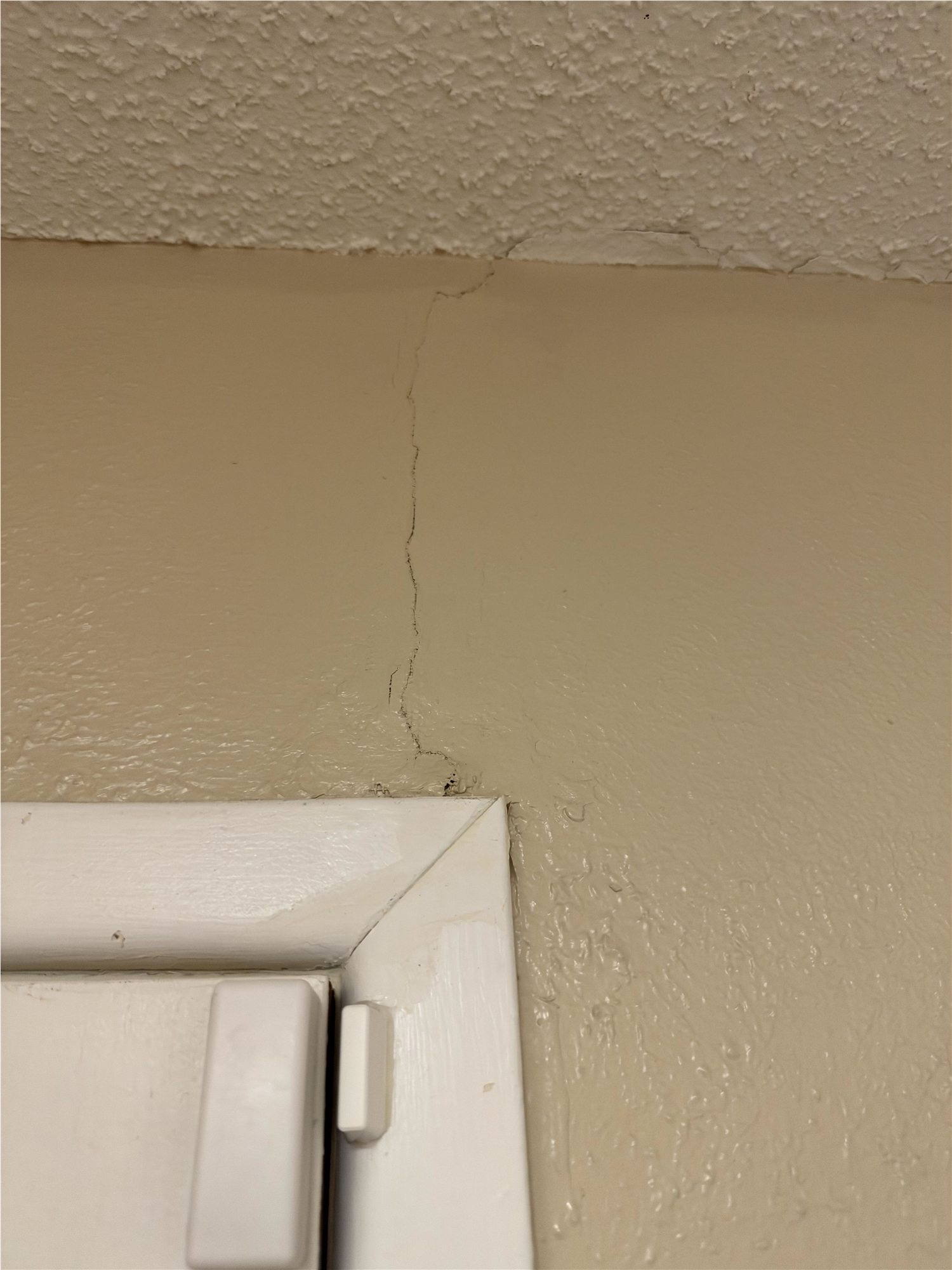
The crack in this photo is narrow and may be limited to the drywall finish. The photo alone cannot tell us whether the wall has moved. The next questions are more helpful: Is the door rubbing? Has this crack been repaired before? Are there cracks in the exterior brick or foundation below this area?
If the answer to all three is no and the crack stays the same, monitoring it may be reasonable. If several clues line up, it is worth having the home evaluated before the crack is covered.
Check the Same Area From the Outside
Stand outside and look at the wall nearest the interior crack. You are not looking for a perfect match down to the inch. You are looking for movement in the same general section of the house.
Pay attention to:
- Stair-step cracks following mortar joints
- Gaps around exterior window or door trim
- Brick that appears offset instead of simply cracked
- Separation where two materials meet
- A visible crack in the foundation below the siding or brick
A small interior drywall crack is less concerning when the exterior wall is sound and the opening works normally. The same crack means more when brick is separating outside or a foundation crack appears below it.
Photo 2: A Crack in the Exposed Foundation
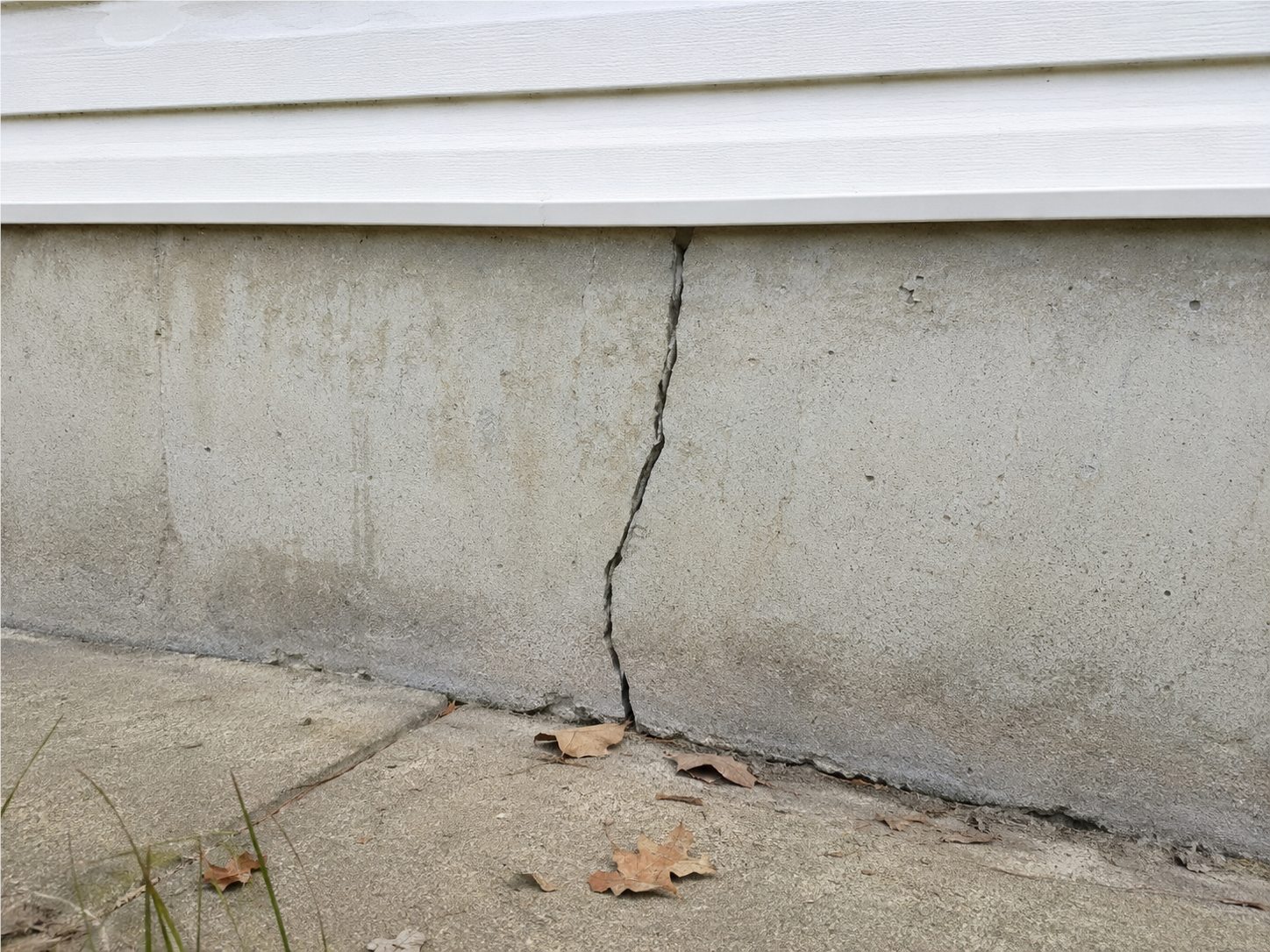
Vertical cracks can form as concrete cures and shrinks, and some remain stable. Direction alone does not determine whether a crack is serious.
Look at whether the two sides still sit in the same plane. Notice if the crack is wider at one end, if water has passed through it, or if it has changed since you first saw it. A dated photo with a ruler in the frame makes future comparisons much easier.
For more information about settlement symptoms, visit Legacy Supportworks' guide to sinking and settling foundations.
Notice Whether the Brick Has Shifted
Mortar can deteriorate, and brick veneer can move somewhat differently from the structure behind it. Still, visible displacement is different from a simple hairline crack.
If the brick on one side of a crack sits forward or lower than the brick on the other side, take a closer look. Also check whether the window or door opening has gone out of square. Do not assume fresh mortar or caulk will solve the problem until you know whether the movement is still active.
Photo 3: Brick Movement Beside a Window
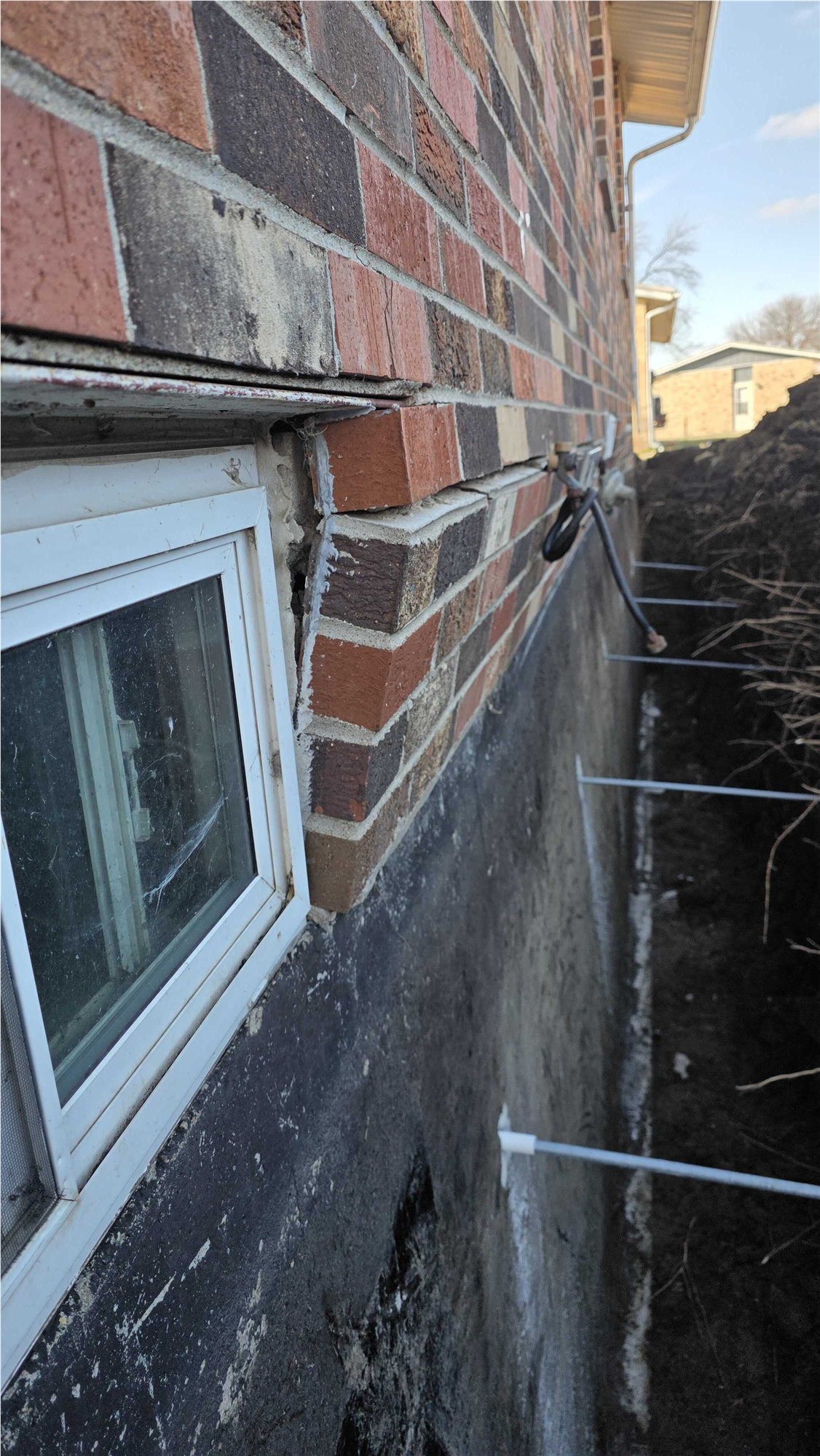
This photo shows more than a surface mark. There is separation around the window and some of the masonry appears displaced. A photo cannot confirm the cause, but this is a pattern we would want to see in person before it is patched.
During an inspection, we would look at the foundation supporting this wall, check the opening for distortion, and look for related symptoms inside the home.
Think About What the Weather Has Been Doing
West Texas homeowners know how quickly conditions can swing from dry to wet. Those moisture changes can affect the soil beneath and around a foundation.
During a long dry spell, some soils lose moisture and shrink. After heavy rain, those soils may take on water and expand. If the supporting soil changes unevenly, one section of a foundation can move differently from another.
That does not mean every crack after a weather change is structural. It does mean the timing is worth writing down. If a crack appears after an unusually dry summer, grows following heavy rain, or seems to open and close with the seasons, mention that during an inspection.
Walk Through the Rest of the House
Before deciding that the crack is isolated, take a quick walk through nearby rooms. You are looking for a pattern, not trying to find something wrong with every small imperfection.
Check for:
- More than one sticking door or window
- Floors that feel sloped or uneven
- Gaps where walls meet ceilings, floors, or cabinets
- Drywall tape that is pulling loose
- Cracks that line up through more than one room
- A chimney, porch, or exterior wall pulling away from the house
One small crack with no other symptoms often calls for observation. Several symptoms appearing along the same side of the home are harder to dismiss as a drywall issue.
Legacy Supportworks explains more of these warning signs on its foundation settlement repair page.
Take Photos Before You Repair Anything
Even if you plan to patch the crack, photograph it first.
Use good light and include a ruler or coin for scale. Take one close photo and another that shows the entire wall, door, or window. Write down the date and note whether the opening sticks or has uneven gaps.
Check it again in about a month and after a major change in weather. Try to stand in the same place and use the same angle. If the crack has not changed and there are no related symptoms, you have useful evidence that it may be stable. If it grows or returns after repair, you also have a clear record to show an inspector.
When Watching the Crack May Be Reasonable
It may be reasonable to monitor the area when:
- The crack is fine and has not changed
- The nearby door or window works normally
- There is no visible displacement
- You do not see related cracking outside
- There is no water staining or dampness
- Floors and trim in the area appear normal
Keep your photos and check the area occasionally. If the crack remains stable through seasonal changes, a normal drywall repair may be all it needs.
When to Schedule a Foundation Inspection
An inspection is a good next step when:
- The crack is growing, branching, or repeatedly reopening
- The door or window has gone out of square
- Several doors or windows have started sticking
- Brick, block, or concrete is visibly displaced
- Matching symptoms appear inside and outside
- Floors slope or feel uneven near the crack
- Water enters through a foundation crack
- A chimney or exterior wall is separating from the house
These signs do not tell you exactly what repair is needed. They tell you that the crack should be evaluated in the context of the whole structure.
If settlement is the cause, the goal is to stabilize the foundation on stronger supporting soil—not simply hide the symptom with new drywall compound or mortar. Learn more about Legacy Supportworks' foundation repair services and push pier systems.
Get the Cause Checked Before You Cover the Clue
Most cracks are not emergencies. They are clues.
Before you patch one near a door or window, take a few photos, test the opening, check the exterior, and look for related changes around the home. That short checklist can help you avoid covering an active problem—or worrying unnecessarily about a stable cosmetic crack.
If you are seeing several warning signs, Legacy Supportworks can inspect the home, explain what is causing the movement, and recommend the appropriate next step. Request a free estimate for a home in West Texas or Cimarron County, Oklahoma.